I'm doing 2 more posts for 70s Week, and they are about my 10 favourite actors from the Hindi films of the 70s… I’ve chosen 5 men and 5 women whose movies I particularly enjoyed in that decade. My all-time favourite Hindi film actors are all listed on my sidebar and show up all the time in my reviews, so these picks will come as no surprise to previous visitors to this blog. But I thought this would be a good excuse to talk about why exactly I love them so much, and of course to put up lots of gratuitous screencaps of each of them!
So I’ll start with the ladies today, and then my post on the men will be up tomorrow. I think the 70s were the last decade that women got really meaty roles in mainstreamHindi cinema (although to be fair, they got plenty of rubbish ones too). But things really nosedived for women in Bollywood in the largely trashy 80s (especially after 1983), and I think the industry is yet to fully recover from that lull when it comes to female roles. A shame. There were some great heroines in the 70s: sassy, spunky, feisty women with minds and voices of their own, and the power to make their own decisions. I miss them.
I cheated a little on the women for this list – I picked 6 instead of 5 actors, because I found it impossible to leave any of them off my list. They each, in various ways, embodied the spirit of the 70s – style, attitude, vivacity, colour, passion, adventure, glamour. Here we go, in no particular order:
• Jaya Bhaduri
I adore this woman’s acting, and although I’ve raved about her about a gazillion times on this blog, I’ll never stop raving. This award-winning actress had the extraordinary ability to disappear into the characters she played, infusing them with a life of their own that was just magical to see. She was at her best playing strong women facing down their destinies, and I just love her older performances, and for me, she is definitely the most talented Bachchan.


I’m on a quest to see all of Jaya’s movies… so far, from the 70s I’ve seen ‘Guddi’, ‘Bawarchi’, ‘Parichay’, ‘Zanjeer’, ‘Abhimaan’, ‘Shor’, ‘Kora Kagaz’, ‘Mili’, ‘Sholay’ and ‘Chupke Chupke’, and will soon watch ‘Koshish’. I’ve loved her in every one of these films, whether she was playing a street urchin, or an infatuated schoolgirl, or an unhappy wife, or a traumatized widow. She made each role memorable. In view of her prodigious talent, it saddens me that she decided to largely give up films in order to be a full-time mother, although she seems happy with her choice (see Filmi Girl’s interesting 70s Week post on Jaya for an alternate view on this).


Much as I wish Jaya had done more films in her younger days, I think she accomplished an extremely impressive body of work in her youth – absolutely great and impactful performances – and I’m grateful for that.
• Hema Malini
Hema rocked out the 70s with graceful dancing, vibrant onscreen presence and gorgeous smile. Always a classy lady, she exuded a unique confidence, elegance and poise onscreen. She wasn’t the most talented actor ever, but as a competent professional, she went for roles that played to her strengths, and she made the most of them. Apart from more conventional seedhi-saadhi heroine roles, she also took on some really fun and feisty roles in the 70s too, like her roles in ‘Seeta Aur Geeta’, 'Sholay' and ‘Jugnu’.


• Sharmila Tagore
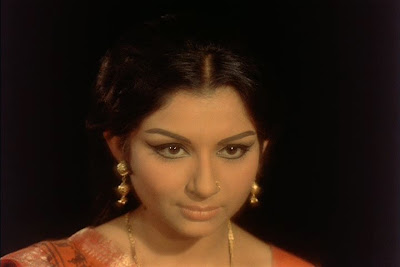
Sharmila is an actor I admire more than I love, although I do love her. I admire her stylish, glamorous looks, her great figure, and her ability to convey just about any emotion in the world with those ultra-expressive eyes and that dimpled smile. Her eyes could exude anything – from femme fatale allure, to baby-sweet cuteness, to everything in between. I admire her distinctive beauty, and I admire her strength, individuality and sophistication, and how she didn’t try to portray a false goody-goody image, either as an actress or a person. Regardless of the outcome, she did things her way, even after marriage (which may, sadly, not be true for some of the other women on my list).
Sharmila is an actor I admire more than I love, although I do love her. I admire her stylish, glamorous looks, her great figure, and her ability to convey just about any emotion in the world with those ultra-expressive eyes and that dimpled smile. Her eyes could exude anything – from femme fatale allure, to baby-sweet cuteness, to everything in between. I admire her distinctive beauty, and I admire her strength, individuality and sophistication, and how she didn’t try to portray a false goody-goody image, either as an actress or a person. Regardless of the outcome, she did things her way, even after marriage (which may, sadly, not be true for some of the other women on my list).


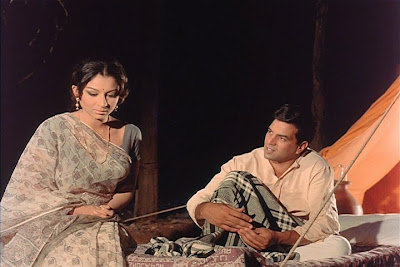
To me, she was above all a style icon of the 70s (the 60s too – in fact, the 60s more than the 70s) – always so great to look at. But she was also a pretty good actress, and I’ve always found her very believable in her roles. In the 70s, from her memorable role opposite Shashi Kapoor in the masala flick ‘Aa Gale Lag Jaa’ to the challenging ‘Mausam’, Sharmila held it together and made her mark.
• Neetu Singh:
How much do I love Neetu??!! She always makes me smile, with her own beautiful smile. She was so gorgeous, sassy, fun, cute and feisty in her 70s roles. I love the fact that she had curves and owned those curves! You never got the feeling that she wasn’t comfortable in her body. I love how she attacked her roles with such gusto and vivacity. I just. plain. LOVE. Neetu.


From the adorable Veera of ‘Deewaar’ to the feisty Neetu of 'Parvarish' to the sweet young doctor of ‘Amar Akbar Anthony’, Neetu was always such fun to watch onscreen. As with Jaya, I do wish she’d kept working after marriage, but I’m grateful to still have her past work to enjoy.
• Zeenat Aman:


More than any of the other actors on my list, I think Zeenat embodied the attitude of 70s cool. She was effortlessly cool, effortlessly stylish, effortlessly funky, effortlessly everything. Sharmila, as I mentioned before, was more about 60s chic, and my other picks didn’t really ‘own’ the unique look and ‘feel’ of the 70s. Zeenat totally did. Totally.


There always seemed to be something rebellious and restless lurking just behind Zeenat’s eyes, and that’s so 70s. No matter how cool, calm and ‘together’ she looked outwardly, you could sense a little inner turmoil, and that made her perfect for her roles in films like the hippie drama ‘Hare Raama Hare Krishna’ and of course, the iconic ‘Don’. I just loved her as Roma in ‘Don’, with her million-and-one hairdos, fabulous wardrobe, and great attitude. Just loved her. Plus (obviously) she was sexy and gorgeous (as most famously seen in 'Satyam Shivam Sundaram', a film in which I do think Mr. Raj Kapoor deployed Zeenat's potent sexiness in a very negative way). Anyway, however you look at it, 70s Zeenat just rocked.


• Mumtaz
I love Mumtaz – she was a magnificent dancer, a lushly stunning woman, and brought such irrepressible spirit and warmth to her roles. And as Memsaab has noted, she had great chemistry with just about any leading man, from Rajesh Khanna to Dharmendra. She was great in her 70s films, especially the ones she did opposite Rajesh Khanna in the early 70s.


Shabana Azmi almost made this list – she did some great masala films in the 70s, like the fun ‘Fakira’, ‘Amar Akbar Anthony’ and of course, ‘Parvarish’. She also made great art films like ‘Ankur’ and ‘Junoon’. But I would much rather rave about her powerful and iconic performances in the 1980s, which really established her as an excellent actor.
So that’s it for the female actors (as, incidentally, Shabana Azmi would call them – she dislikes the word ‘actress’) I loved in the 70s. Who are your favourites? Will be back to talk about the guys tomorrow….